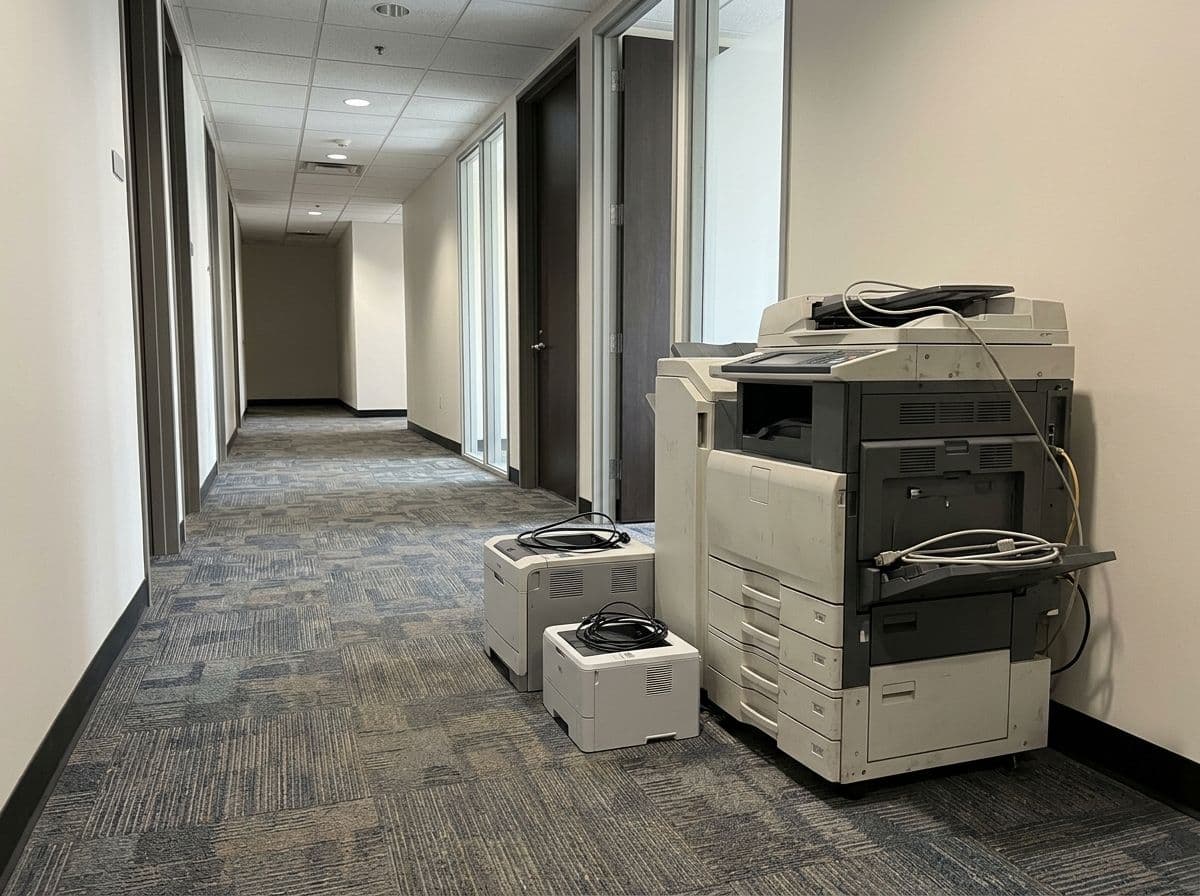
The short answer. A Georgia business disposes of old printers and copiers by having any internal hard drive wiped or destroyed, then recycling the machine through a recycler that documents the pickup. American Resources picks up printers, copiers and multifunction devices from businesses across metro Atlanta, destroys the drives, and gives you a certificate of destruction.
Printers and copiers leave offices on lease returns, floor moves and refresh cycles, and they usually leave without anyone thinking about what is stored inside them. The Federal Trade Commission's guidance for businesses is direct: "The hard drive in a digital copier stores data about the documents it copies, prints, scans, faxes or emails." A retired copier is a data-bearing device first and a large plastic box second.
#Step one: the drive
Digital copiers and many multifunction printers carry a hard drive or flash storage that keeps images of what passed through them. The FTC's guide lists two ways to deal with it. During use, securely overwrite the drive, and on a leased machine make sure the leasing company overwrites the drive before it goes back. Or ask about "services that will remove the hard drive and return it to you, so you can keep it, dispose of it, or destroy it yourself." The guide also warns against pulling the drive yourself, because on some machines that damages the firmware.
For a machine you own and are retiring, the practical path is: have the recycler remove and destroy the drive, and get the destruction listed on the paperwork with the machine's serial number.
#Step two: the consumables
Toner cartridges and drums are not one of the federal universal waste categories, which are batteries, pesticides, mercury-containing equipment, lamps and aerosol cans. Most cartridge makers run take-back programs; unopened stock has resale value; used cartridges can travel with the machine to a recycler that separates them.
#Step three: the machine
A floor-standing copier weighs as much as a small refrigerator and does not go down a stairwell easily. Tell the recycler which floor it is on, whether there is a service elevator, and whether building management needs a window for moving equipment. That is the single biggest cause of a pickup taking twice as long as planned.
#Leased versus owned
A leased machine goes back to the lessor; your job is the drive. Get the lessor's drive procedure in writing before the return date, and keep the confirmation. An owned machine is yours to retire, and the drive destruction record is yours to keep.
#Georgia specifics
Georgia has no state statute written for business e-waste. The state's hazardous waste rules incorporate the federal rules by reference, so the federal position on consumables applies, and the data obligations come from federal law and your own client contracts rather than from Atlanta or the counties. County drop-off sites do accept printers and copiers from the public, for a fee, without paperwork. For a fleet of machines, a documented pickup is the route.
Need it collected? American Resources picks up business electronics across metro Atlanta and destroys data-bearing media before anything is processed. Request an electronics recycling quote or send a rough inventory through the contact form.