The short answer. A Georgia business disposes of old laptops by wiping or destroying the drive, keeping the lithium-ion battery out of the trash, and recycling the rest through a recycler that documents the pickup. American Resources picks up laptops from businesses across metro Atlanta, destroys the drives, and gives you a certificate of destruction.
Laptops are the device businesses lose track of. They leave with departing staff, sit in drawers, and turn up in a box during an office move. Each one carries two things that matter at disposal: a drive full of whatever its last user did, and a lithium battery.
#The drive
A laptop that held customer or patient data is covered by the same federal rules as a server. For health information, HIPAA requires policies for "the final disposition of electronic protected health information, and/or the hardware or electronic media on which it is stored." For consumer information, the FTC Disposal Rule requires "reasonable measures to protect against unauthorized access to or use of the information in connection with its disposal." Deleting files, resetting the machine or removing the user account is not a sanitization method. The drive is either sanitized to a documented standard or physically destroyed, and the record says which.
Encrypted drives still get sanitized or destroyed. Encryption reduces the exposure if a drive is lost; it does not replace the disposal record.
#The battery
Lithium-ion batteries are the fire risk in the e-waste stream. The EPA's position: "Most lithium-ion batteries when discarded would likely be considered ignitable and reactive hazardous wastes." The EPA also points out that keeping them out of the trash and recycling systems matters because there "they can start fires and endanger workers and nearby communities." For a business, that means laptop batteries do not go in the dumpster, swollen batteries get set aside in a non-flammable container, and the recycler is told how many units have batteries in them.
#Asset tags, leases and buy-backs
Before anything is boxed: pull the asset list, mark leased units (they go back to the lessor with the drive handled) and mark any units under a buy-back or trade-in. A laptop with resale value is worth more sanitized than shredded, so say which units are candidates for reuse and which are not.
#Where laptops can go in Georgia
County drop-off sites accept laptops from the public, often for a fee, and Cobb County's site is one example. Drop-off gives you no data record and no manifest. Manufacturer trade-in programs handle a unit or two. For a batch, a commercial pickup with per-unit serial logging and a certificate of destruction is the route that leaves you with a file you can show someone.
Georgia has no state statute specific to business e-waste; the state's hazardous waste rules incorporate the federal rules by reference, so the federal positions above are the ones that apply. More in our Georgia e-waste regulations guide.
#Before the pickup
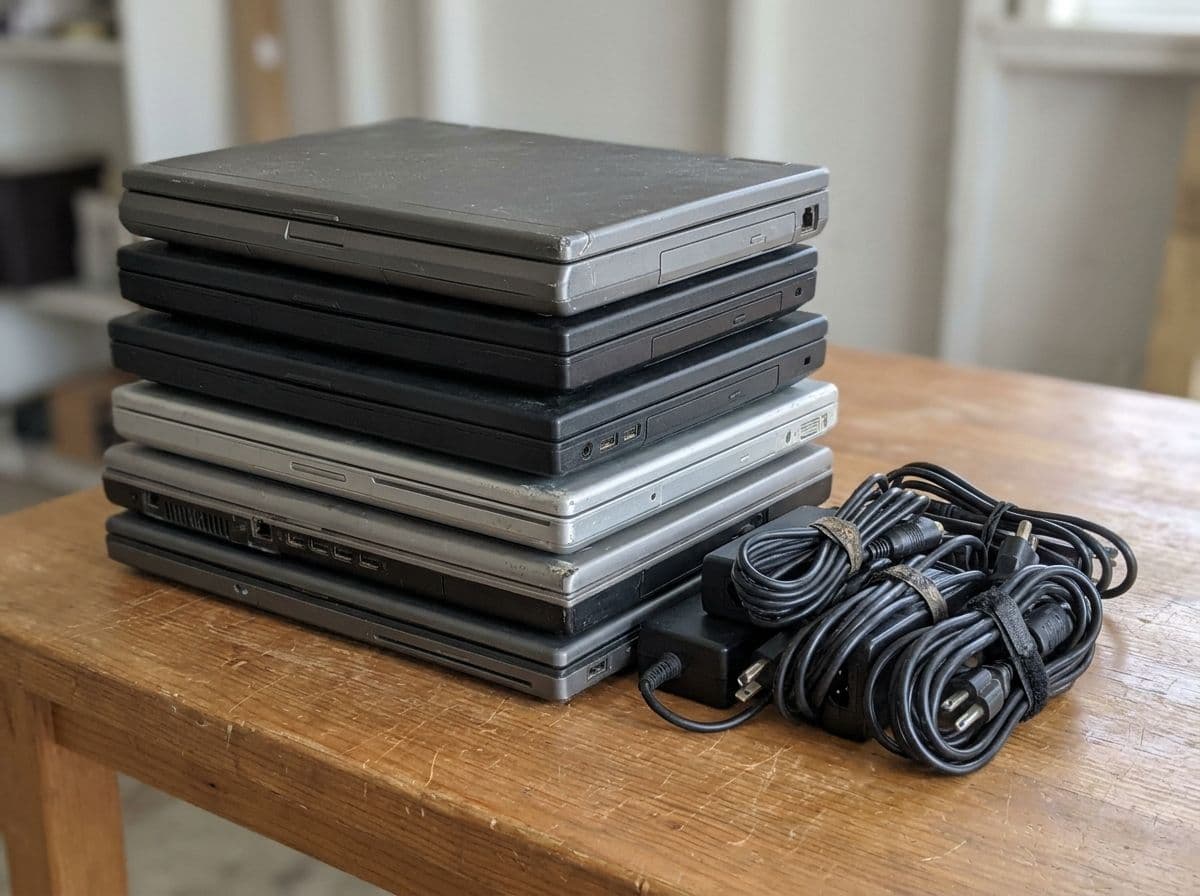
Count the units. Note which still have drives and which have had drives pulled. Bag loose drives separately and label the bag. Set swollen batteries aside. Photograph the pile. That is a five-minute job that turns a box of laptops into an inventory.
Need it collected? American Resources picks up business electronics across metro Atlanta and destroys data-bearing media before anything is processed. Request an electronics recycling quote or send a rough inventory through the contact form.