Auto Recycling in Atlanta
End-of-life vehicle recycling for fleets, dealerships and body shops
What is Auto Recycling?
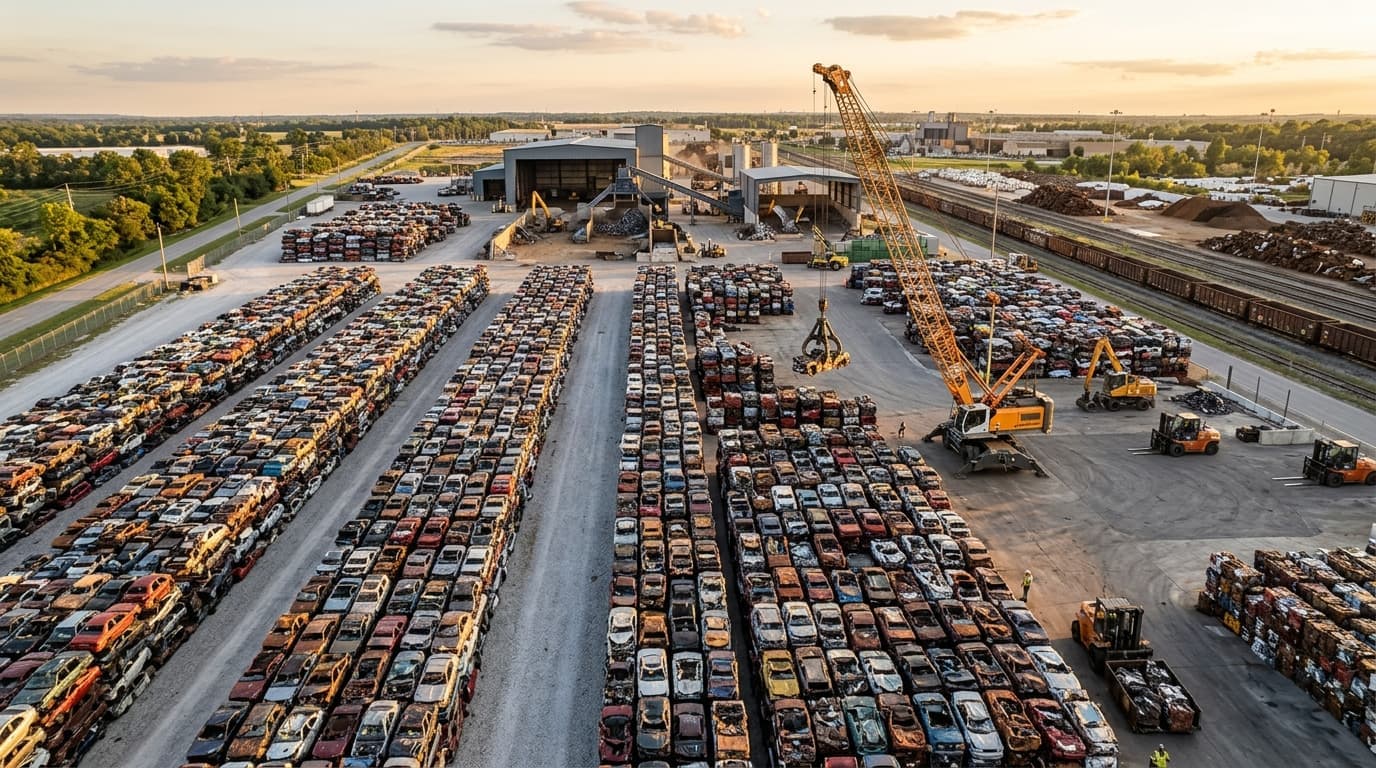
American Resources recycles end-of-life vehicles for businesses across metro Atlanta: fleet operators retiring vans and trucks, dealerships clearing trade-ins that will not retail, body shops holding total-loss vehicles, and municipal and utility operations replacing older units. We collect from your yard, drain and separate the fluids and components that cannot go through a shredder, recover the parts worth reusing, and process the remaining shell for metal.
When a vehicle reaches the end of its useful life, responsible recycling recovers valuable materials while preventing environmental contamination from hazardous fluids and components. Our automobile recycling service handles the entire process from tow to final recycling.
We properly drain and dispose of all hazardous fluids: motor oil, transmission fluid, coolant, brake fluid, and battery acid. Reusable parts are catalogued and salvaged. The remaining vehicle is crushed and processed for metal recovery.
Fleet managers retiring vehicles, dealerships clearing trade-ins, individuals with a non-running car: we make responsible end-of-life disposal straightforward, and we tell you up front what the recoverable material in it is worth.

Vehicles we accept
- Cars and sedans
- Trucks and vans
- SUVs
- Fleet and commercial vehicles
- Non-running and salvage vehicles
- Most makes, models, and conditions
From the list of units to an empty corner of the yard
Send the list
Make, model, year and rough condition for each unit, plus whether it rolls and whether it still has its drivetrain. A photo of the row is usually faster than a spreadsheet.
Settle the paperwork
Titles or the appropriate release documents, plate removal, and anything an asset register needs closing out. This is the step that stalls disposals, so it is worth starting first.
Collection from your site
We come to the yard, the lot or the back of the shop rather than asking you to move dead units. Access, gate hours and whether a unit can be winched all shape the visit.
Depollution and processing
Fluids, batteries and other components that cannot go through a shredder come out first, reusable parts are recovered, and the shell is processed for metal.
Built around business disposals, not a cash counter
Most of what is written about scrapping a car is aimed at somebody selling one vehicle. This service is built for the other case: an operation that has several units to move, a yard they are occupying, and a finance or asset team that needs each one accounted for. Fleet operators replacing vans and light trucks, dealerships holding trade-ins that will never retail, body shops sitting on total-loss vehicles, rental and leasing companies at the end of a cycle, and municipal and utility fleets all work that way.
What those buyers want is different too. The question is rarely what a single hulk is worth. It is how to get eight of them off a lot before month end, who signs what, and whether the disposal will still make sense when somebody audits the asset register a year later.
We do also handle single vehicles from private owners, and that has not changed. It is simply not what this page is about, and it is not the work the service is designed around.
Depollution, parts recovery and the shell
A vehicle is not one material, which is why it cannot be treated like a skip of scrap. Fuel, oil, coolant, brake and transmission fluid, refrigerant, the battery, tyres and undeployed airbags all have to come out and be handled separately before anything is crushed. That work is the reason end-of-life vehicles go to a processor rather than into a general metal container.
Once the vehicle is depolluted, the parts worth recovering are taken off. What is worth recovering depends entirely on the unit: a low-mileage engine or transmission out of a fleet van that failed for an unrelated reason is worth more intact than melted, while a twenty-year-old shell that has been sitting outside is essentially steel with some non-ferrous in it.
The remainder is processed for material recovery, which is where the steel, aluminium, copper from the harness and the non-ferrous in the drivetrain go back into supply. Nothing about that step is unusual; getting the first two steps right is what separates a proper disposal from a problem you have handed to somebody else.
Titles, releases and closing out an asset
The paperwork is what holds up most commercial disposals, and it is worth starting before the collection is booked rather than on the day. For a business that generally means the title or the appropriate release document for each unit, the plates off, and a record tying the VIN to whatever internal asset number the finance system knows it by.
Fleet and municipal disposals often involve units that have been off the road for a while, which is where the trouble usually is: a title that was never transferred when the vehicle was bought, an auction unit that arrived with paperwork nobody filed, or a total loss where the insurer holds the document. Tell us which of those you are dealing with and the collection can be planned around it instead of arriving to a vehicle that cannot legally move.
What comes back to you afterwards is a record of what was collected, unit by unit, so the disposal can be closed out on your side rather than becoming a line somebody has to explain later.
How value is worked out, without the guesswork
Two things decide what an end-of-life vehicle is worth: what material is in it, and what is still on it. Weight and metal grade set the floor. Beyond that, a complete unit with its drivetrain and emissions components intact is worth more than the same shell with those already removed, and a vehicle that rolls and steers is cheaper to load than one that has to be dragged.
The market moves, so the honest answer on any given week depends on where metal prices sit. What does not change is the method: we tell you what we are valuing before collection rather than after, and we would rather requote than surprise you when the load is already gone.
For businesses running both vehicle disposals and ordinary scrap metal from a workshop, it is usually simpler to put both under one arrangement. The same is true where a fleet yard also generates appliance and equipment disposals or the office side needs electronics recycling.
Why Auto Recycling?
Hassle-Free Disposal
We handle everything: towing, paperwork, fluid disposal, dismantling, and metal recycling.
Value You Can See
What the recoverable material is worth is explained before collection, not after the load has gone.
Environmental Protection
Proper handling of hazardous fluids prevents soil and groundwater contamination.
Parts Recovery
Reusable parts are salvaged, extending their useful life and reducing manufacturing demand.
Maximum Material Recovery
Advanced processing recovers the maximum amount of recyclable metal from every vehicle.
All Vehicle Types
Cars, trucks, vans, SUVs: we accept all makes, models, and conditions.
The American Resources Difference
End-to-End Service
From towing your vehicle to our facility through final metal recycling, one partner, one process.
Depollution First
Fluids, batteries, tyres and airbags are removed and handled separately before any vehicle is processed for metal.
Maximum Material Recovery
Our processing recovers the highest possible amount of recyclable material from every vehicle, keeping metals and components in circulation.
Built For Fleet Paperwork
Titles, releases and VIN records handled as part of the job, so a disposal can be closed out on your side.
Auto Recycling FAQ
Auto Recycling across metro Atlanta
We provide auto recycling for businesses throughout the Atlanta metro area, including Marietta, Alpharetta, Sandy Springs, Roswell, Decatur, Smyrna, Duluth, Lawrenceville, Kennesaw, Buckhead. See all service areas →
Auto Recycling in your city
Each page below covers what auto recycling looks like in that city: the business districts and corridors we collect from, and how a collection is usually arranged there.
Sandy Springs auto recycling
Facilities fleets, courier cars and shuttles around Perimeter Center.
Alpharetta auto recycling
Corporate and sales fleets along the GA-400 corridor.
Marietta auto recycling
Municipal fleet turnover and Cobb industrial work trucks.
Buckhead auto recycling
Piedmont Road dealers, body shops and hospitality vehicles.
Roswell auto recycling
Trade vans and seasonal service fleets from the flex bays.
Duluth auto recycling
Delivery vans, box trucks and Gwinnett repair-shop units.
Kennesaw auto recycling
Industrial fleet trucks and campus facilities vehicles.
Smyrna auto recycling
Contractor pickups, work trucks and hospitality shuttles.
Decatur auto recycling
County and campus fleet units, Scottdale repair-shop clearances.
Lawrenceville auto recycling
County fleet rounds and GA-316 distribution yard units.
Ready to Get Started with Auto Recycling?
Get a free site assessment and a written recycling plan for your business. Most quotes go out within one business day.