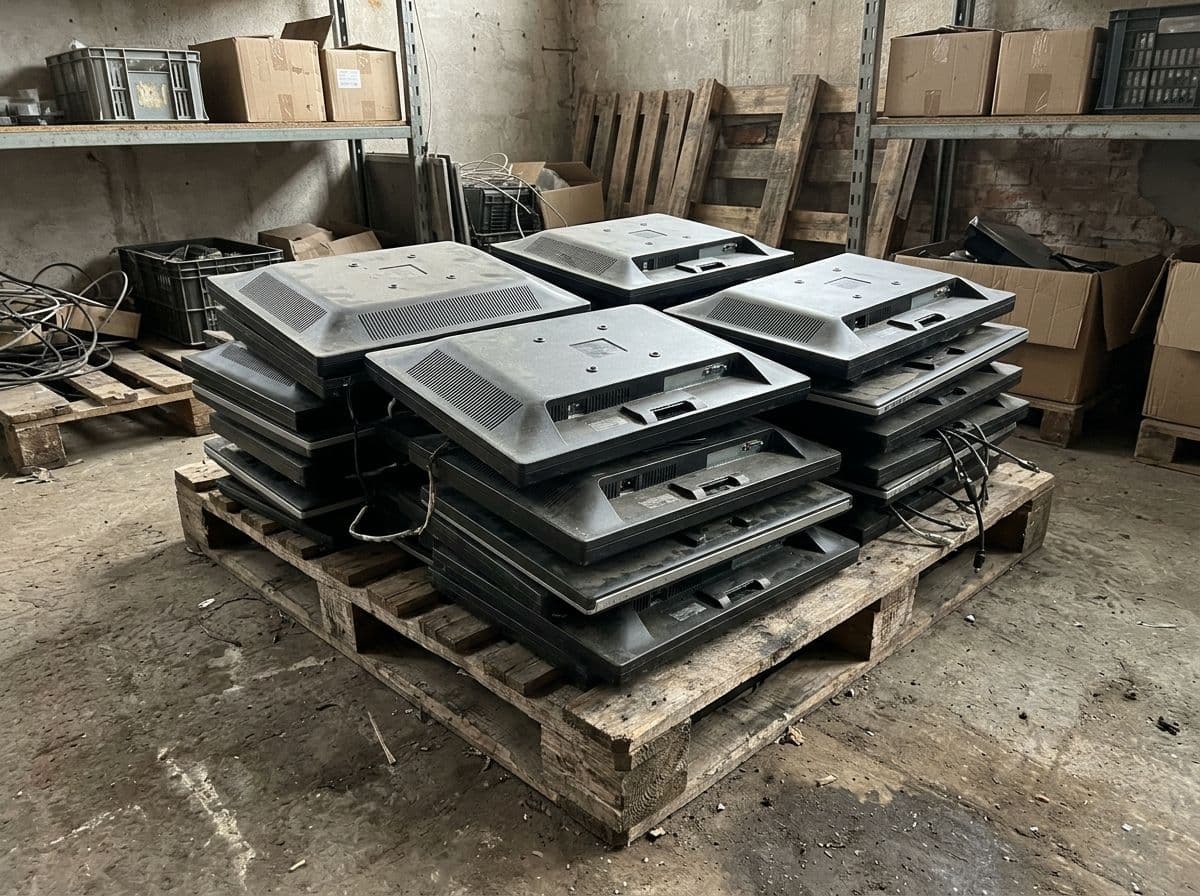
The short answer. A Georgia business disposes of old monitors by sorting tube monitors from flat panels and sending both to a recycler that handles the leaded CRT glass and documents the load. American Resources picks up monitors from businesses across metro Atlanta.
With a stack of retired monitors, the answer depends on one question: are any of them CRTs? Flat panels and tube monitors sit under different rules, and the wrong bin for a CRT is the one place a business can create a real compliance problem out of an office cleanout.
#First, sort by type
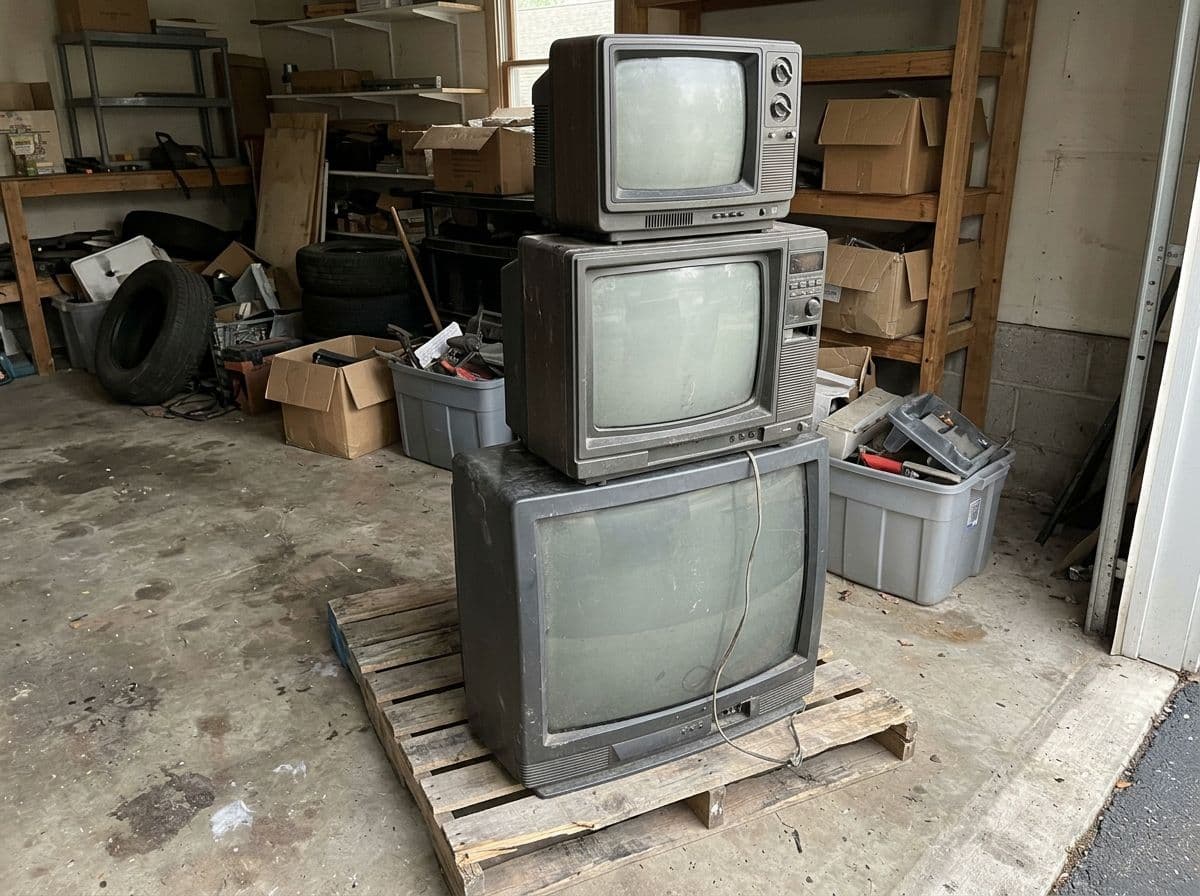
CRT monitors are the deep, heavy tube displays. The glass in a CRT contains lead. Under the federal CRT rule, used CRTs that are sent for recycling are conditionally excluded from hazardous waste regulation, but only if they are actually recycled and not disposed of or stockpiled. The EPA's wording: used intact CRTs are "conditionally excluded from hazardous waste regulation within the United States as long as they are not disposed or speculatively accumulated." A CRT that goes in a dumpster is not being recycled, so that exclusion does not apply to it.
Flat-panel monitors (LCD and LED) are not covered by the CRT rule. They are still electronics with circuit boards, cabling and plastics that a recycler separates for recovery, and they are still your responsibility until they leave your control with a record.
#Do monitors hold data?
Ordinary monitors do not store the documents shown on them. The exceptions are all-in-one computers that look like monitors, smart displays with internal storage, and conference-room screens with built-in meeting software. Treat anything with an operating system as a computer, not a monitor, and route it through the same data-destruction step as a laptop. If you are not sure, the label on the back and the ports will tell you: a power input and a video input only means a plain monitor.
#The three ways a Georgia business can dispose of monitors
1. County drop-off sites. Several metro counties accept electronics at their transfer stations. Cobb County's site in Marietta lists computer monitors among accepted items and notes that electronics "may be dropped off for a fee" and that "Televisions will not be recycled and are subject to regular tipping floor fees." Drop-off works for a handful of units. It does not give you a manifest, a pickup, or any document you can file.
2. Manufacturer take-back. Some monitor makers run mail-back or trade-in programs. They are built for one or two units and usually exclude older or damaged stock.
3. A commercial recycler with pickup. For anything beyond a car load, a business recycler collects at your dock or office, separates CRTs from flat panels, and gives you a record of what was collected and where it went. That record is what an auditor, a landlord or an ESG report can actually use.
#Before the pickup
Count the units and note how many are CRTs. Keep CRTs intact; a cracked tube is a "used broken CRT," which carries its own storage and labeling conditions under the federal rule. Pull cables and stands only if you want to; the recycler can take them attached. Flag any all-in-one or smart display so it is handled as a data-bearing device.
#What Georgia law adds
Georgia has no state statute that specifically regulates business e-waste; the state's hazardous waste rules incorporate the federal RCRA rules, including the universal waste provisions, by reference. So the rules above are the rules that apply in Georgia. The fuller picture is in our Georgia e-waste regulations guide.
Need it collected? American Resources picks up business electronics across metro Atlanta and destroys data-bearing media before anything is processed. Request an electronics recycling quote or send a rough inventory through the contact form.