The short answer. A Georgia business disposes of flat-screen TVs by sending them to an electronics recycler rather than a dumpster, because older LCD panels contain mercury in their backlights and every panel contains boards and glass a recycler separates. American Resources picks up flat-screen TVs and displays from businesses across metro Atlanta.
Lobbies, conference rooms, break rooms, waiting rooms and bars accumulate screens, and a refit can put twenty or thirty of them in a corridor at once. They are lighter and simpler than the old tube sets, but they are not without hazards, and the rules for a business that generates a pallet of them are not the rules for a household with one.
#Which kind of flat screen do you have?
LCD with fluorescent backlight. Most LCD TVs made before roughly 2010, and many for some years after, are lit by thin fluorescent tubes behind the panel. The EPA's list of consumer products that contain mercury includes displays: "Mercury is used in LCD screens and monitors." A broken backlight releases that mercury; an intact one does not, which is why these sets should travel whole and be dismantled by a recycler, not crushed in a compactor.
LED-backlit LCD. Newer sets replaced the fluorescent tubes with LEDs and carry no mercury in the backlight. They still contain circuit boards, a power supply with capacitors, a glass panel bonded to plastic films, and a steel or aluminum frame.
Plasma. Heavy, glass-fronted, and out of production for years. Recycled for glass, boards and metal.
OLED. The newest sets. No backlight at all; recycled like an LED set.
If you do not know which you have, the model number on the back tells the recycler, and it changes nothing about how you prepare the set. It changes how the recycler takes it apart.
#Tube TVs are a different guide
The deep, heavy sets with a glass tube fall under the federal CRT rule and carry lead in the glass. They have their own page: how to dispose of CRT TVs in Georgia.
#The routes for a Georgia business
County drop-off. Metro counties accept electronics at their transfer stations, with a fee and with limits on TVs. Cobb County's site in Marietta notes that "Televisions will not be recycled and are subject to regular tipping floor fees." That is a disposal route, not a recycling one, and it gives you no record.
Retailer take-back. Some electronics retailers accept TVs up to a size limit, usually one or two per visit, for a fee.
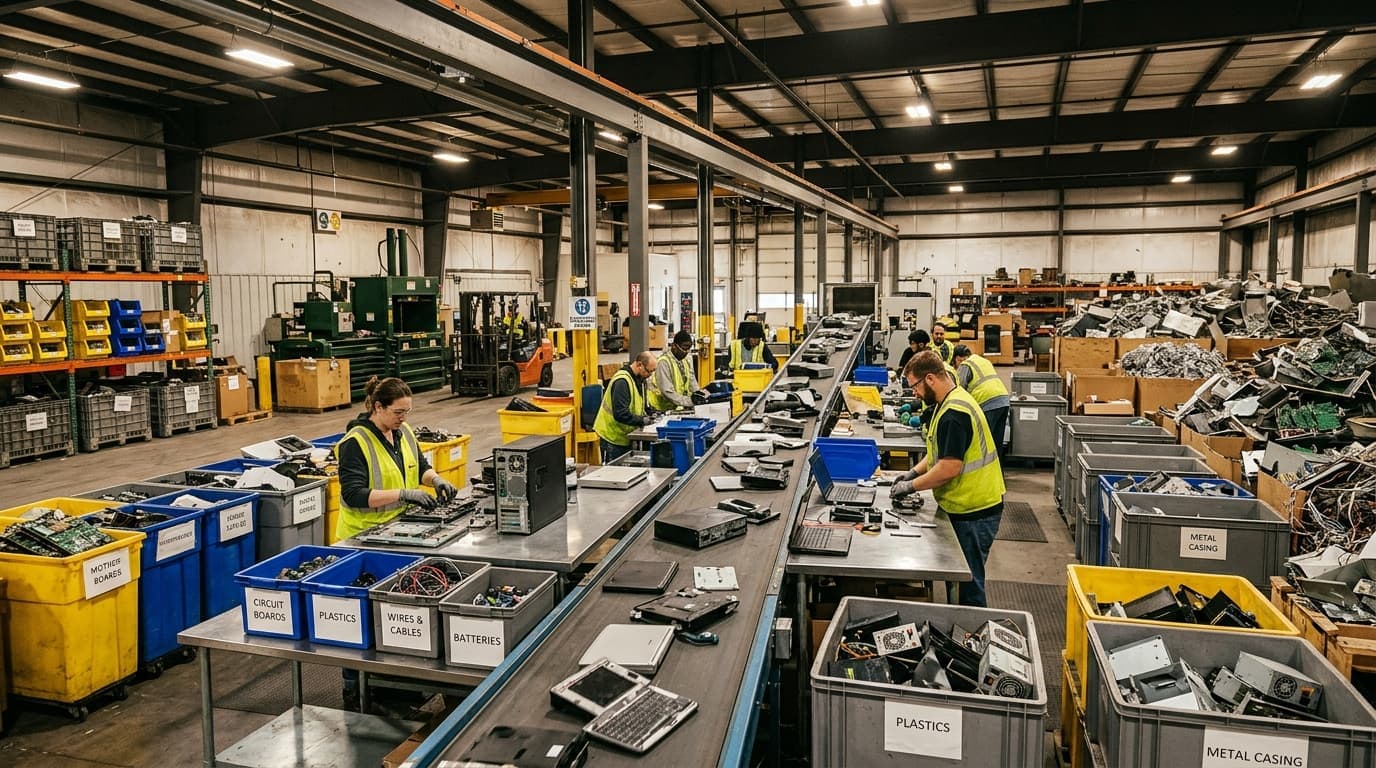
A business recycler with pickup. For a refit or a closure, a recycler collects the screens on pallets, dismantles them, and routes the fluorescent backlights to mercury recovery and the rest to glass, metals and plastics. The monitor and TV recycling page describes what we accept.
#Preparing screens for pickup
Leave them whole. Do not stack screens face to face without padding; a cracked panel is a mercury release on an older set and a cut hazard on any set. Remove wall mounts if you can and keep the remotes and cables together; they travel in the same load. Smart TVs hold logins to streaming accounts and sometimes to your network: sign out or reset each set from its menu before it leaves, the same way you would a phone.
#What Georgia law adds
Georgia has no e-waste statute and no landfill ban on televisions; its landfill bans cover lead-acid batteries, whole tires and yard trimmings., Its hazardous waste rules adopt the federal rules, including the universal waste rules for mercury-containing equipment and lamps, by reference. The federal universal waste categories are "Batteries. Pesticides. Mercury-Containing Equipment. Lamps. Aerosol Cans." A business that generates a quantity of mercury-backlit screens is well inside the reasons that rule exists.
Refitting a floor or closing a location? Request an electronics recycling quote or send the screen count through the contact form.