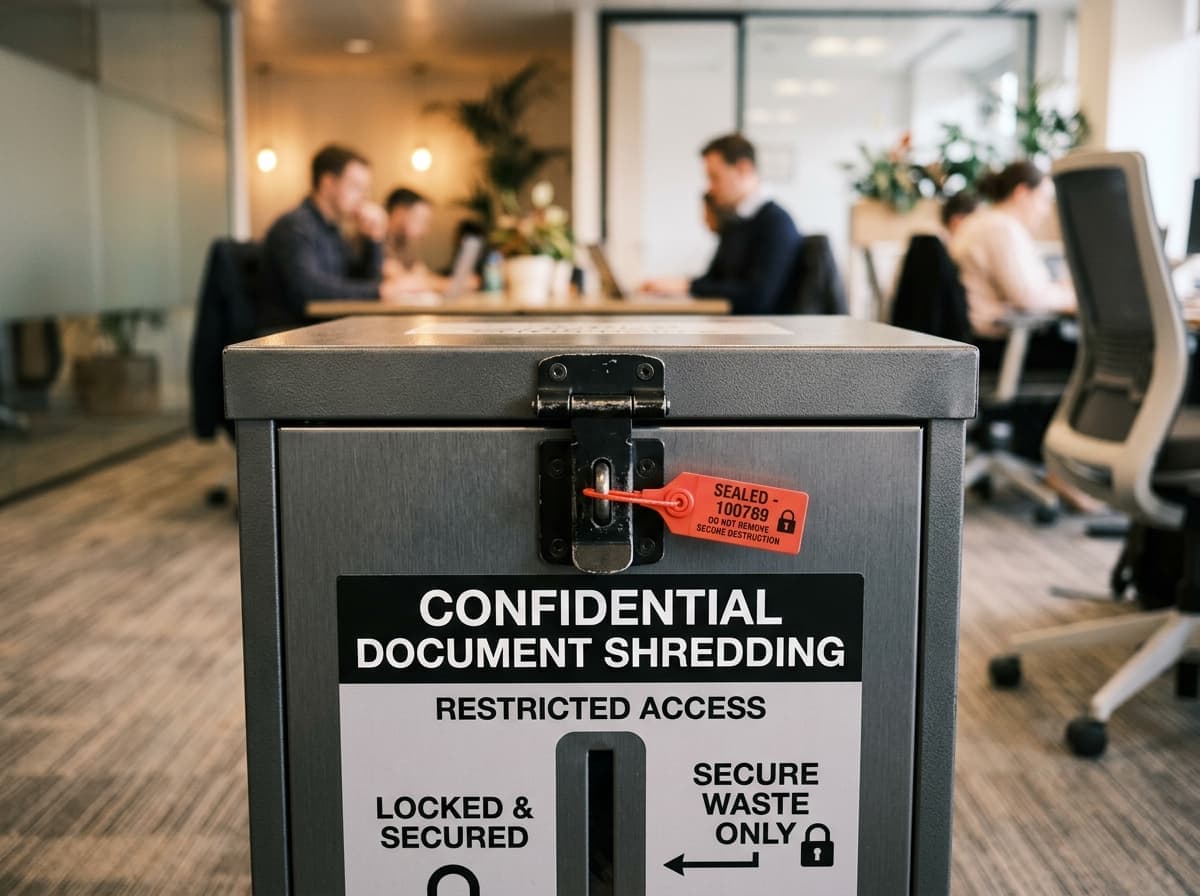
Every business generates confidential documents: employee records, financial statements, customer data, strategic plans, legal correspondence. And every one of those documents becomes a liability the moment it's no longer needed. Secure document destruction isn't just good practice. For many businesses, it's a legal requirement with serious penalties for non-compliance.
#Who Needs a Destruction Program
If your business handles any of the following, you are legally required to have a document destruction policy and process: protected health information (HIPAA), consumer financial information (FACTA Disposal Rule), publicly reported financial records (Sarbanes-Oxley), student education records (FERPA), or customer personal information (various state privacy laws including Georgia's own data protection statutes).
#On-Site vs. Off-Site Shredding
On-site shredding means a mobile shredding truck comes to your facility and destroys documents while you watch. Off-site shredding means documents are collected in secure bins, transported to a shredding facility, and destroyed there. On-site shredding provides the strongest chain of custody because the documents never leave your premises: you can witness the destruction in real time. Off-site shredding is typically less expensive per pound and may be more practical for large-volume destruction events.
#How to Vet a Shredding Vendor
The single most reliable filter is NAID AAA Certification, administered by i-SIGMA. A certified vendor undergoes regular, often unannounced, third-party audits of its security, employee screening, and destruction processes. Beyond certification, confirm the vendor performs background checks on personnel, uses GPS-tracked and locked vehicles, provides destruction documents for every job, and recycles 100% of the shredded paper.
#Keep the Paper Trail
Compliance is something you have to be able to prove. For every destruction event, keep the destruction documents recording the date, method, volume, and the vendor that performed it. HIPAA-covered entities must keep these records for six years; for other businesses, match the retention period of the records you destroyed. Done consistently, that file is your complete defense in an audit.
Our paper shredding service shreds your records and gives you a certificate of destruction. Where shredding is one of several streams a business is trying to get under control, our environmental consulting looks at what your business throws away and how to recycle more of it.